91.48%invoices auto-routed in one accounting month (review of 1 Sep 2026)
10 wkssite timesheets from kickoff to company-wide use
11 dayssales reconciliation from kickoff to go-live
90 daysWeChat orders to first production courier order
9engagements · delivery status shown
2markets: NZ and China
Education & TrainingNZPilot · Demo
NZ · International education group · lead screening (phase-one pilot)
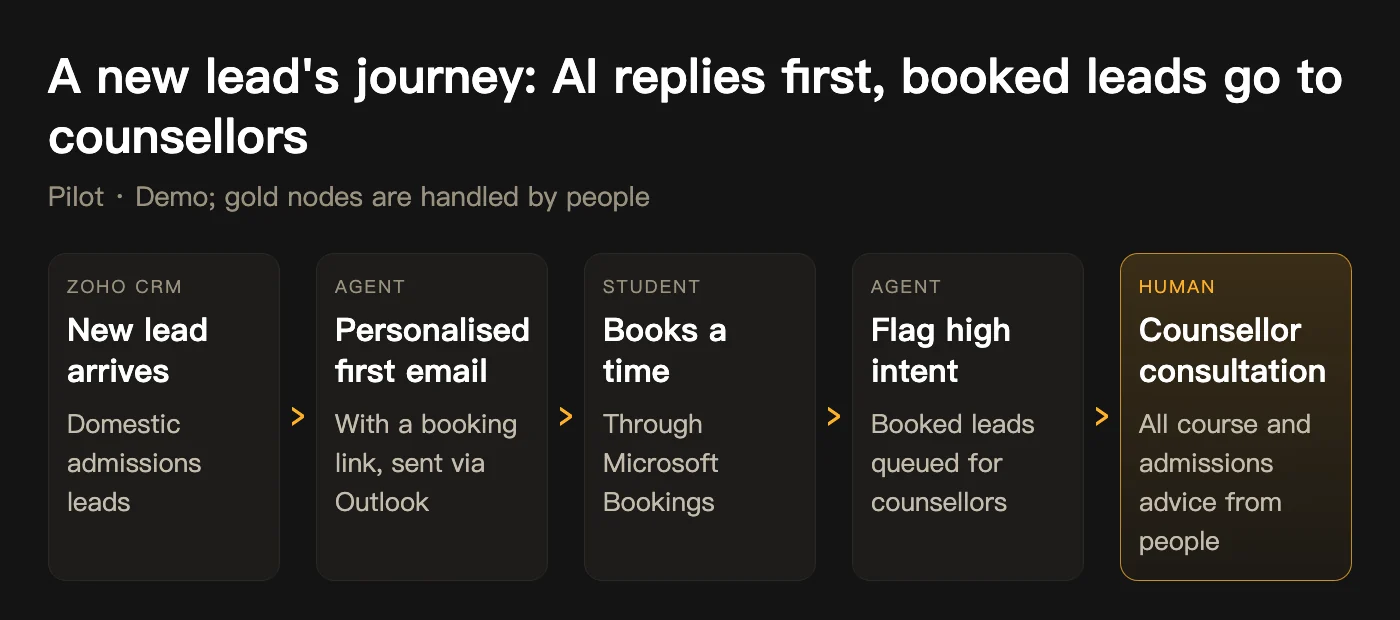
Lead enters CRM→Auto first email + booking link→Booked leads to counsellor queue
✕ BeforeMore than two thousand new leads sat in the CRM (the client’s estimate at a 2026-07-31 meeting); counsellors could only call one by one with no way to prioritise.
- Pilot: new Zoho leads get a personalised email and booking link; those who book are routed to a counsellor
- Agent live in Microsoft Teams; admitted students with stalled visas are flagged with a draft follow-up (validated in a test environment)
Read the full case →
Education & TrainingCNPilot · Demo
CN · Study-abroad consultancy · coaching-service documentation (co-design phase)
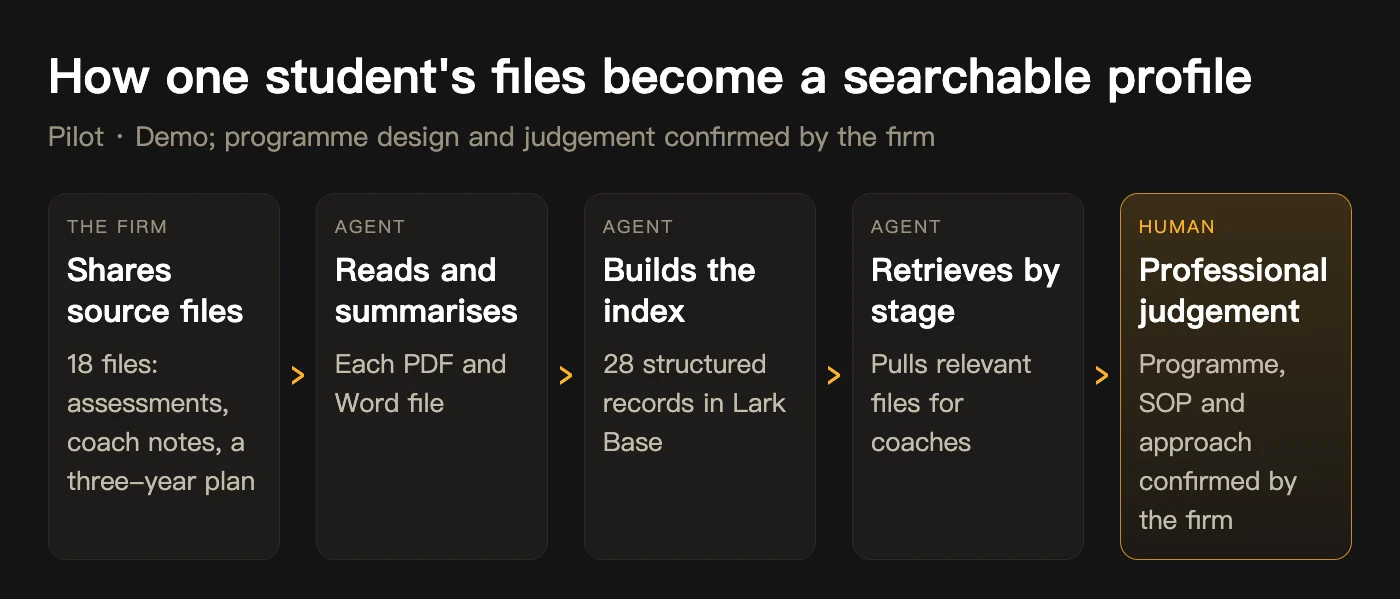
Source files→Agent summaries→Lark Base index→Coach retrieval by stage
✕ BeforeAssessment reports, coach notes and three-year plans lived in PDFs and Word files with gaps at every hand-off.
- First pilot student: 18 source files plus 10 team notes indexed into 28 structured records
- Programme design and professional judgement stay with the firm; AI structures and drafts
Read the full case →
Construction & TradesNZLive
NZ · Construction head contractor · automatic invoice routing
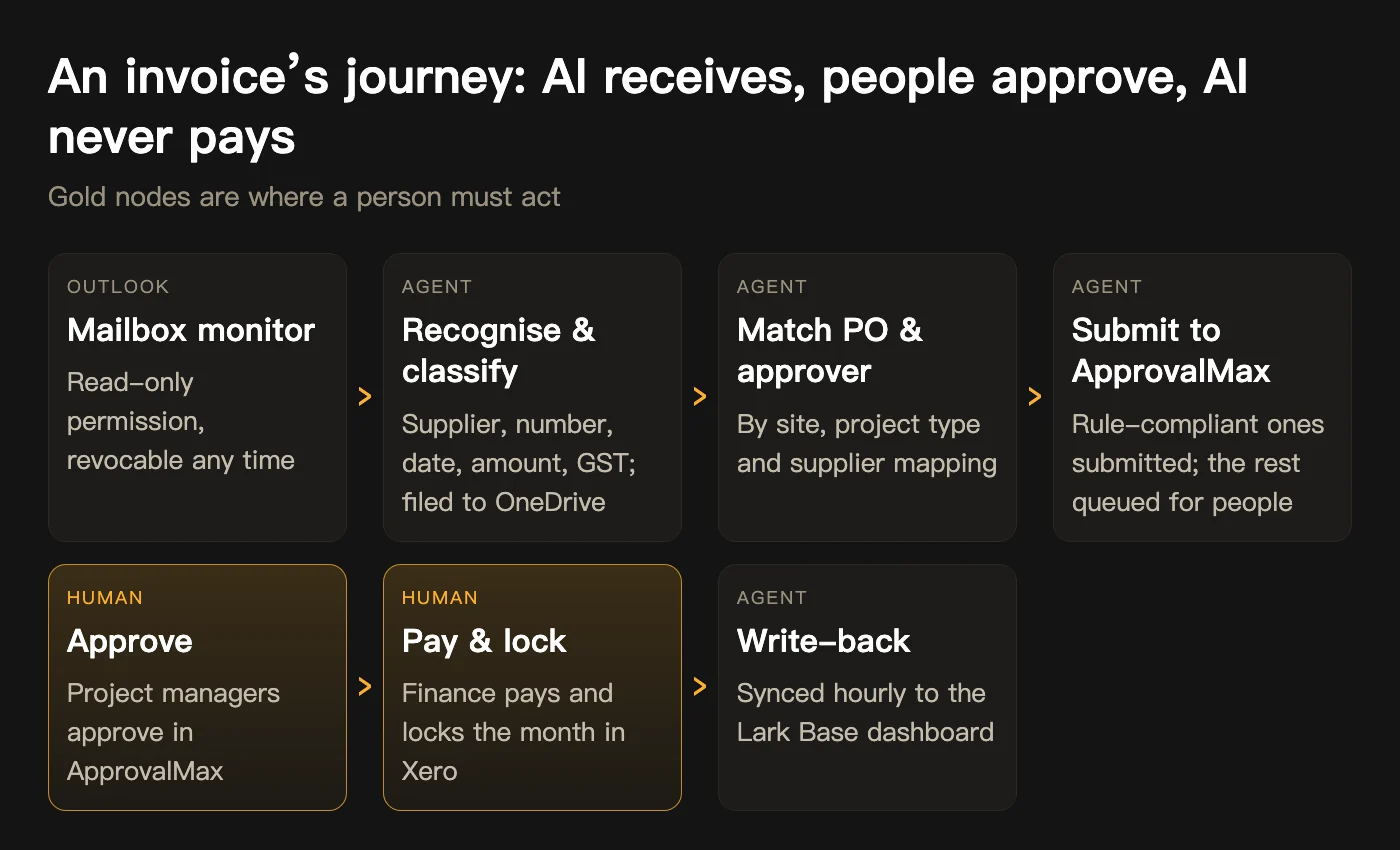
Invoice OCR→PO & approver match→Submit to ApprovalMax→Status write-back
✕ BeforeInvoices keyed by hand, approvals stuck with no visibility, overdue only discovered after the fact.
- Agents read, file, match purchase orders and submit approvals; people still approve in ApprovalMax and pay in Xero
- 730 of 798 documents routed automatically in one accounting month (91.48%, project review of 1 Sep 2026); admin and approver dashboards
Full case study: 91% invoice automation →
Construction & TradesNZPartly live
NZ · Construction company · receivables automation
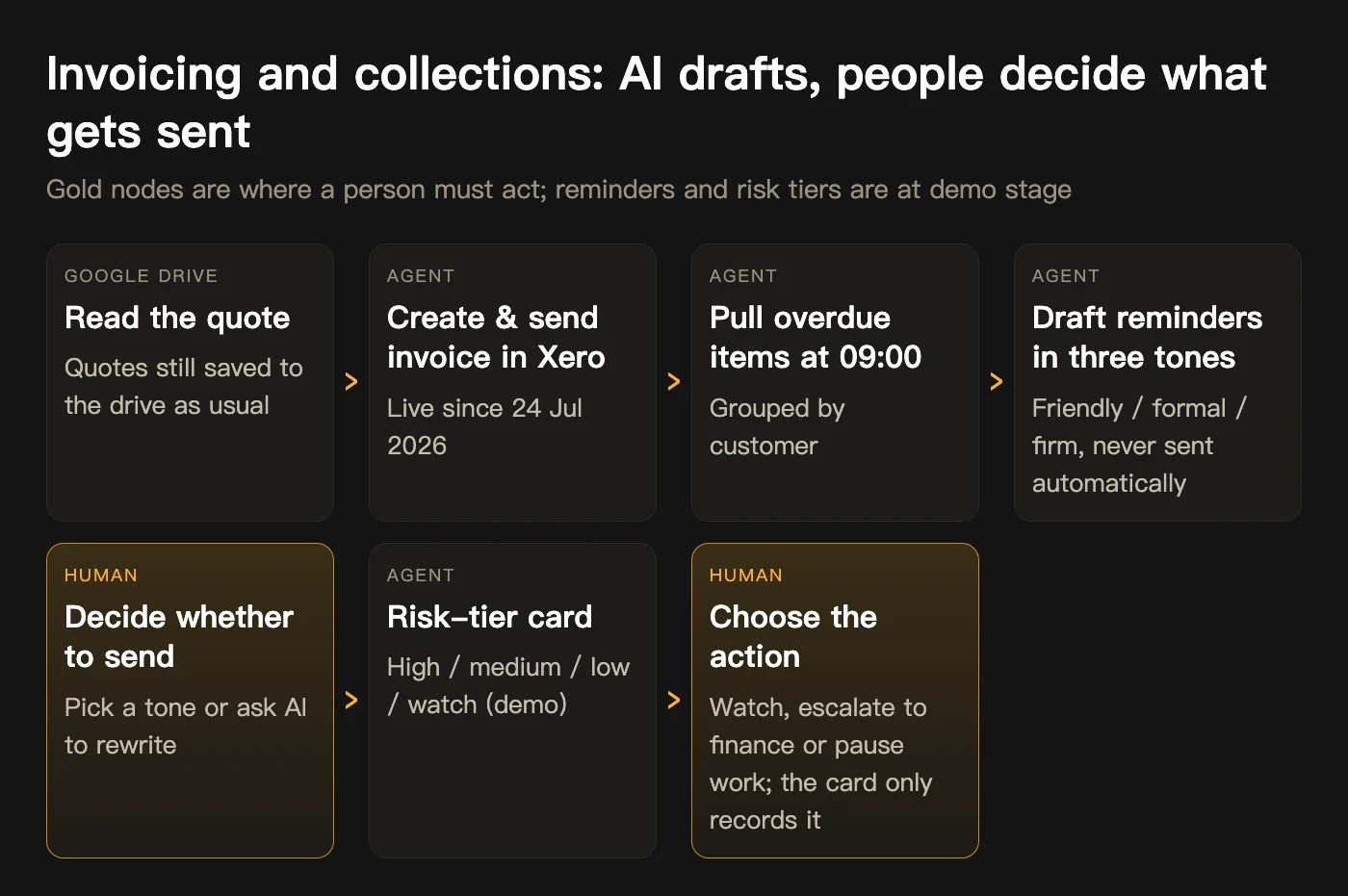
Quote→Xero invoice & send→Daily overdue pull→Reminder drafts, 3 tones→Risk tier cards
✕ BeforeInvoices were keyed by hand, overdue accounts meant reading the Xero ageing report, and reminder tone depended on the day.
- Agent reads quotes from Google Drive, creates and emails the Xero invoice (MVP live Jul 2026)
- Daily 09:00 pull of Xero overdue items into reminder drafts in three tones, drafts only, never auto-sent; four-tier risk cards for management (demo stage, Sep 2026)
Read the full case →
Construction & TradesNZLive
NZ · South Island builder · site hours and labour cost
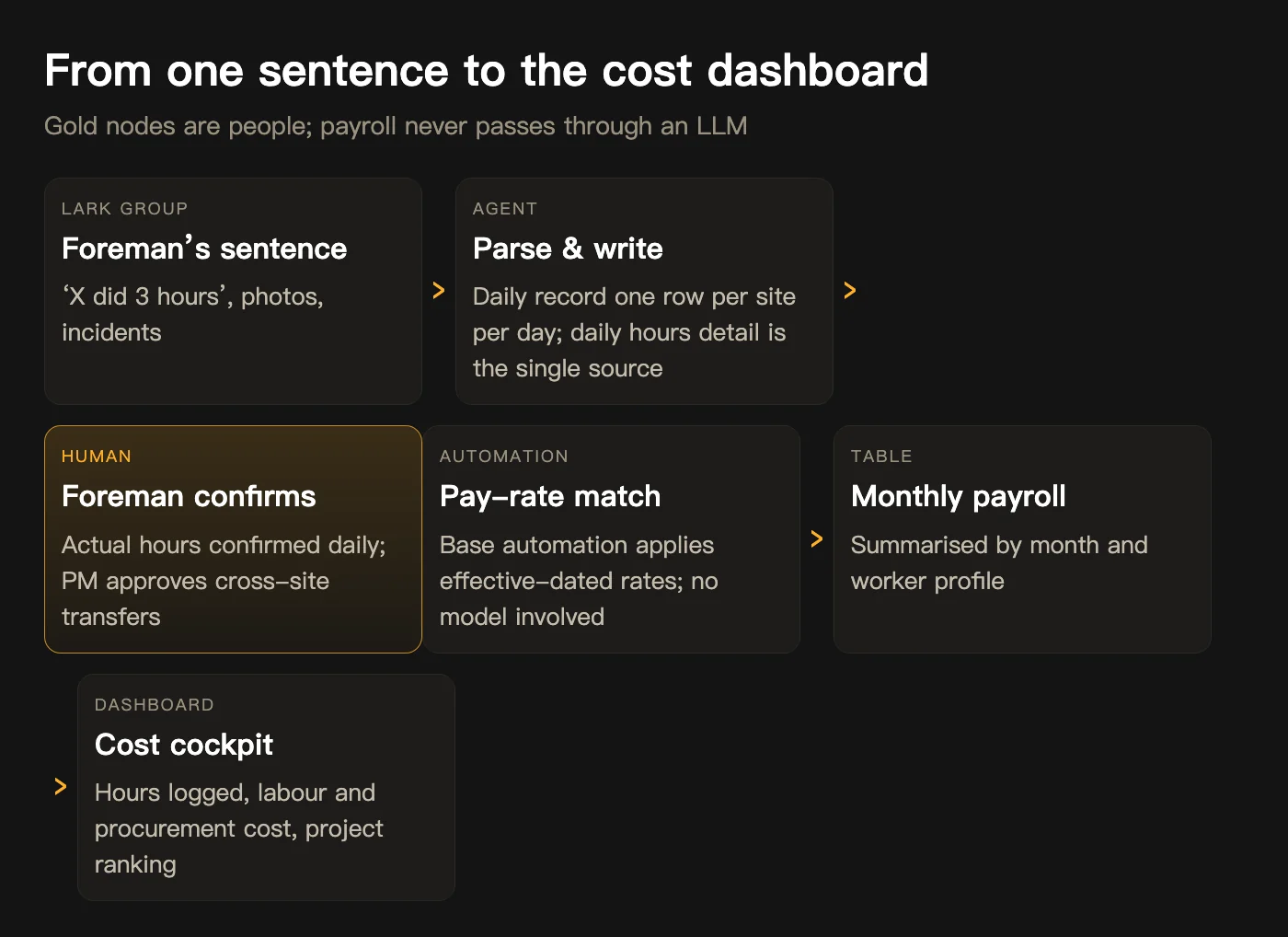
One sentence in Lark→Agent parses and writes→Foreman confirms→Pay rates applied automatically→Cost dashboard
✕ BeforeHours were recalled by foremen after work and totalled in Excel; the owner could not see labour cost per project.
- Foremen post one sentence in the Lark group they already use; the agent writes the daily hours detail and site diary, and pay rates are applied by a Base automation, not a language model (kickoff 2026-04-08, company-wide 06-15)
- 2026-06-27: 20 projects, 334 daily records and over 10,000 hours in the system; payroll and cost visible by role
Full case study: site timesheets from Excel to a chat group →
Trade & LogisticsNZ ⇄ CNLive
NZ ⇄ CN · Health-products retail · WeChat orders to SF Express labels
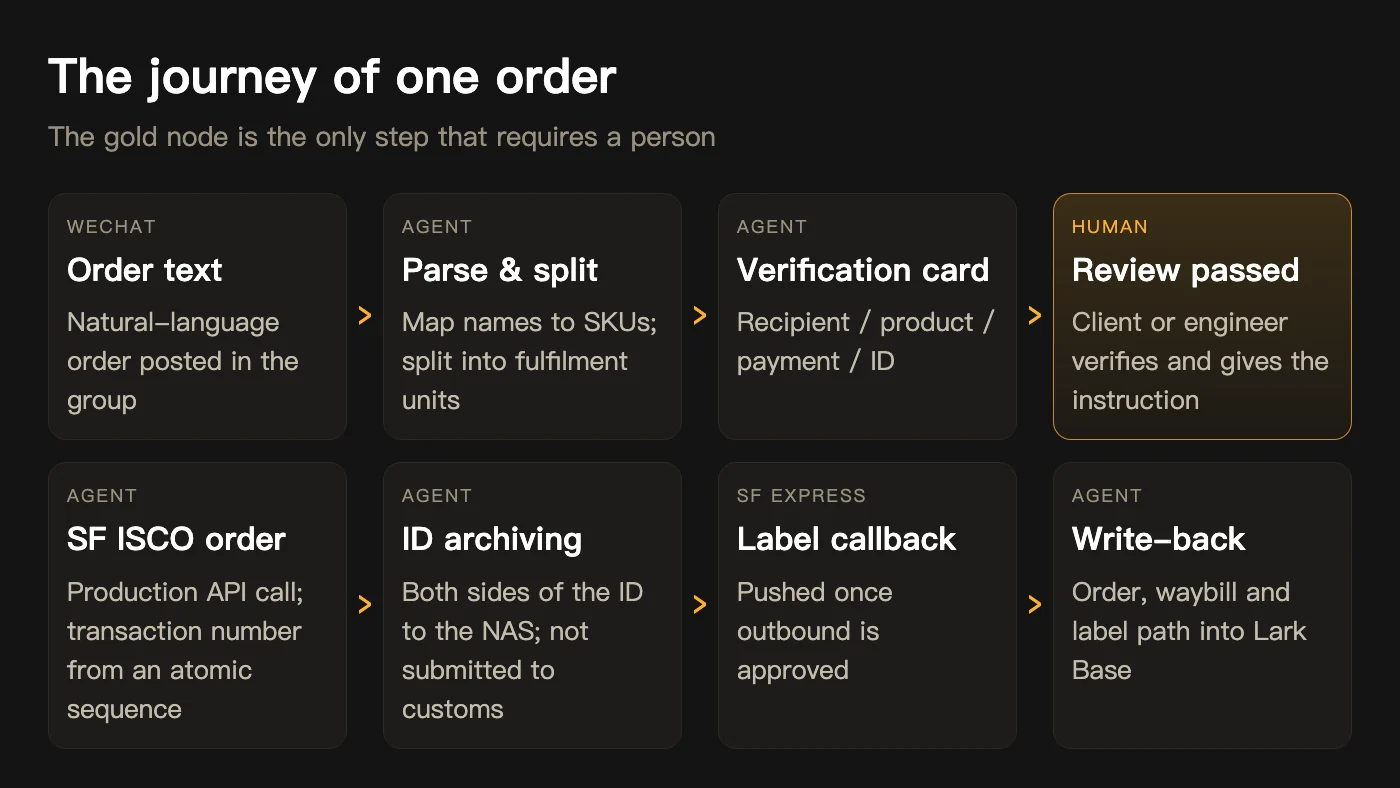
Group order→Split & verification card→Human 4-point check→SF order & ID archive→Label callback
✕ BeforeOrders sat in group chats; one staff member copied each into a master sheet, the SF template and an ID archive, then sent labels back one by one.
- Agent parses WeChat orders, maps SKUs, splits and issues a verification card; a person checks recipient, product, payment and ID and says ‘review passed’ before the agent calls SF Express (first production order 2 Sep 2026)
- SF pushes the label after dispatch; the agent archives it and writes back to Lark Base (live 9 Sep 2026). ERP and WeChat unchanged
Full case study: WeChat orders to SF Express labels →
Trade & LogisticsNZ ⇄ CNPartly live
NZ ⇄ CN lane · Freight forwarder · three workflows, pre-sales to destination port (phased delivery)
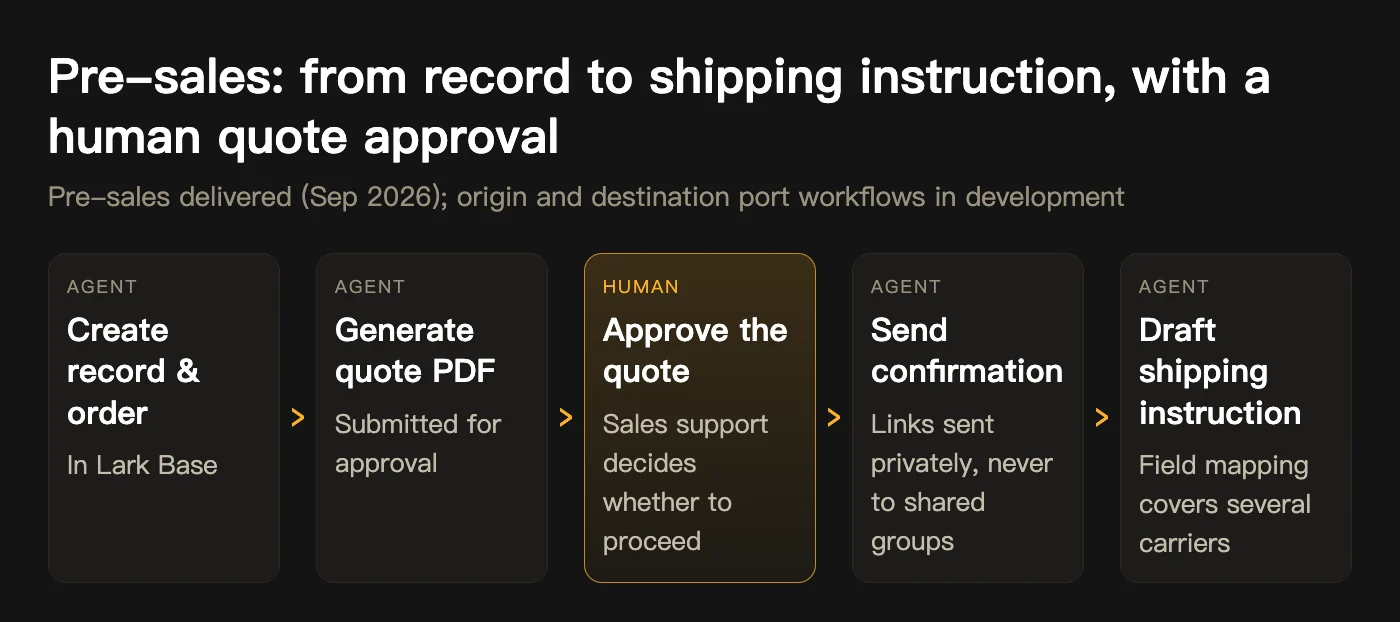
CRM record→Order creation→Quote PDF approval→Confirmation email→Shipping instruction
✕ BeforeNo shared rules for order creation, quote approval or shipping-instruction hand-off; repeated back-and-forth produced many dead orders.
- Pre-sales: client record, order, quote approval, confirmation email and shipping instruction chained; quotes released only after sales-support approval (delivered Sep 2026)
- Origin-port pre-alert checks and destination-port ETA and release alerts in development; stage review 15 Sep 2026
Read the full case →
Finance & Business ServicesNZPartly live
NZ · Mortgage adviser team · content operations & client touch
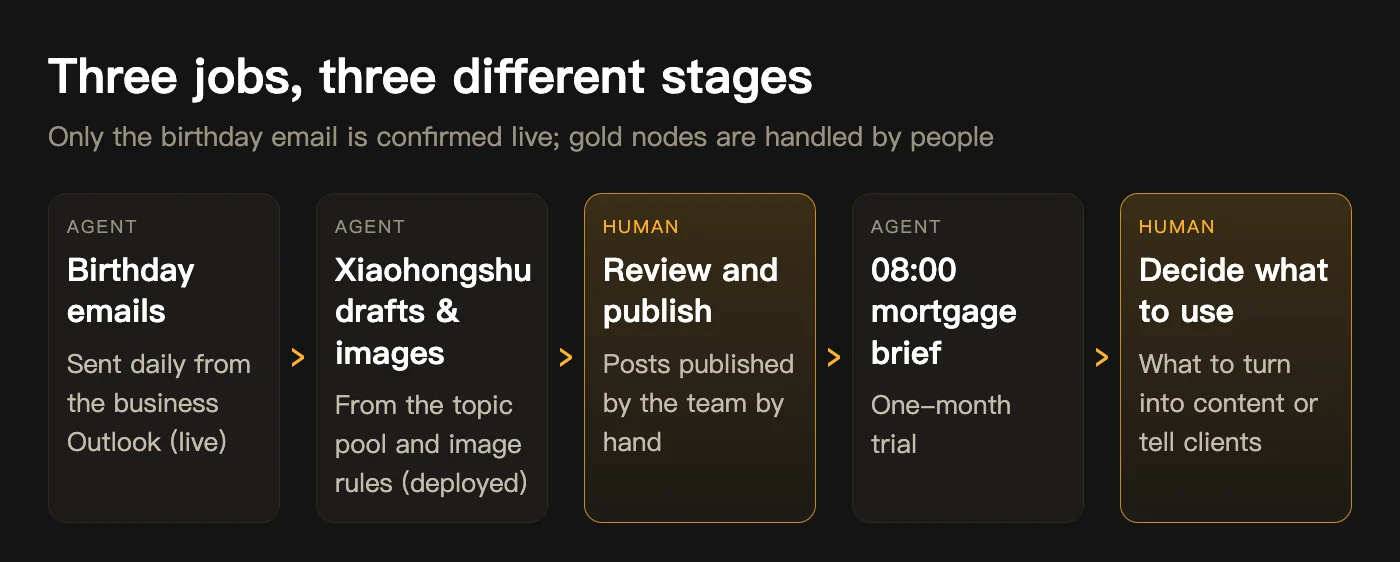
Mailbox authorised→Birthday emails→Xiaohongshu topics & images→Daily mortgage brief
✕ BeforeClient birthdays depended on an adviser remembering; the Xiaohongshu account had too little content to find a voice.
- Birthday emails go out automatically through the authorised Outlook mailbox (live Aug 2026)
- Topic pool and image rules set up; advisers produce posts by chatting with the agent; a daily 08:00 brief on mortgage rates, OCR and refix news
Read the full case →
Finance & Business ServicesCNPilot · Demo
CN · Venue & park leasing · conversational CRM capture (MVP demo stage)
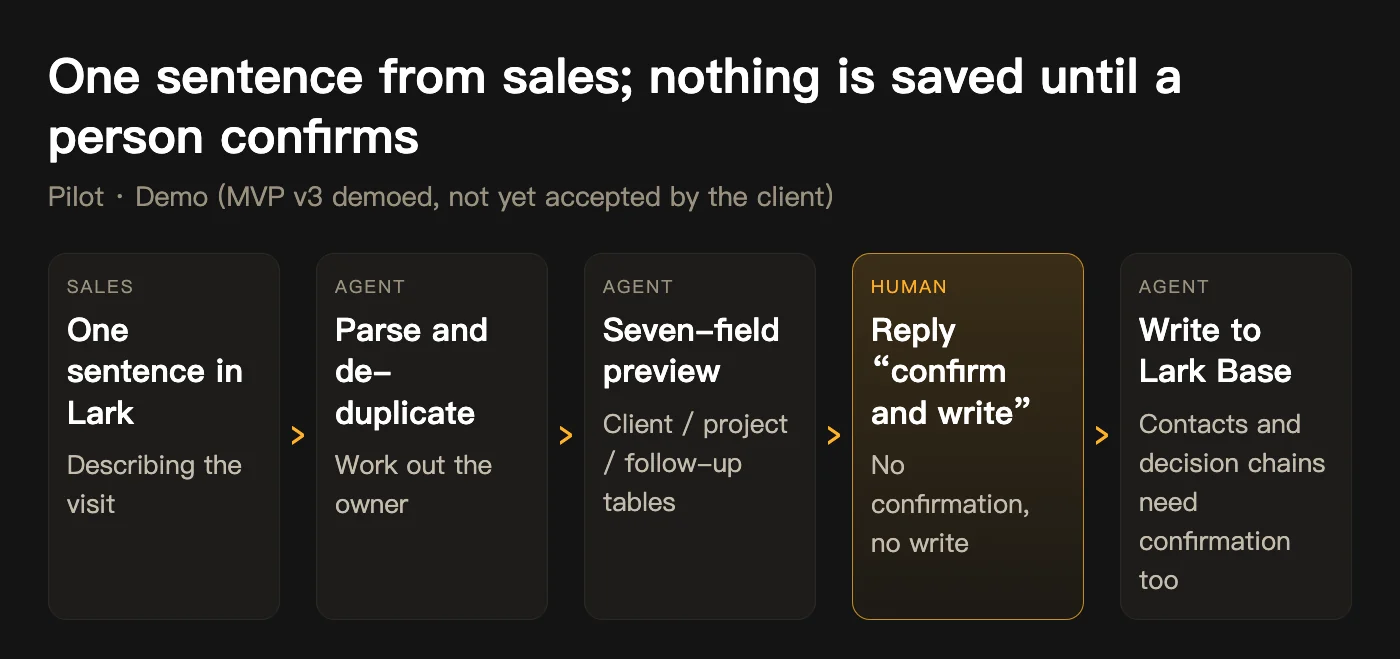
One sentence in Lark→Seven-field preview→Reply ‘confirm and write’→Client / project / follow-up tables
✕ BeforeFollow-ups lived in chats and heads; CRM fields sat empty; history was scattered across each salesperson’s Excel.
- Sales describe a visit in a Lark group; the agent parses, de-duplicates and previews seven fields; nothing is saved until they reply ‘confirm and write’ (MVP v3, demoed Sep 2026)
- Five contact roles and relationship tiers; one-click decision-chain diagram (tested 10 Sep 2026)
Read the full case →
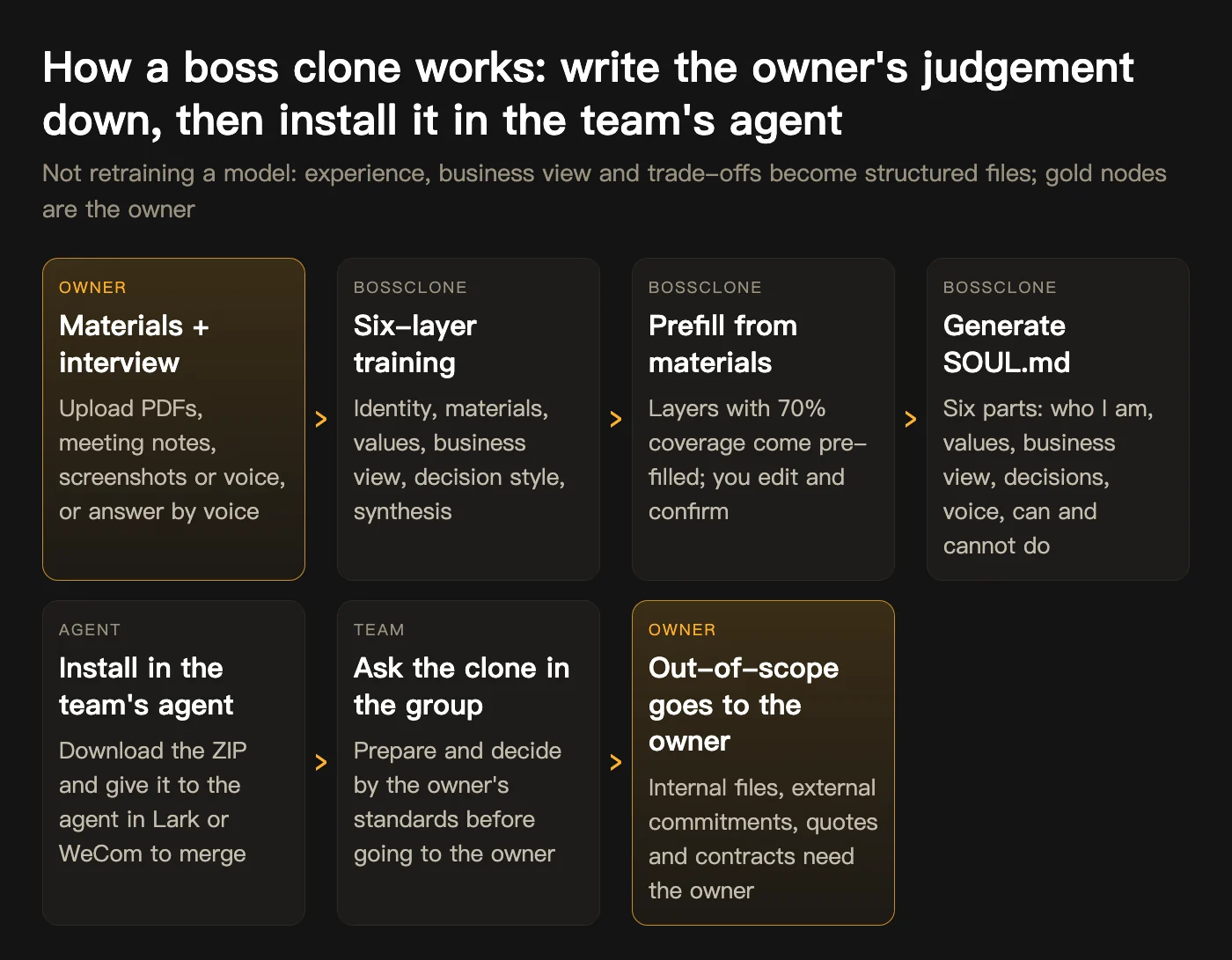
The cases on this page come from BEE Sigma’s actual client engagements in New Zealand and China; company names are withheld at clients’ request. For accuracy, each card states its delivery status: Live means the workflow runs in the client’s day-to-day operations and is used by their team; Partly live means some steps are in use while others are in demo or development; Pilot · Demo means it has run in a test environment or demonstration but is not yet in full daily use; In development means it is at the design or build stage. Figures are taken from dated project review records and some have not been confirmed in writing by the client; results depend on each client’s existing systems, data and participation and are not a promise of outcomes for other businesses. Content is current as at the dates shown; systems are subsequently operated by clients and we do not hold later figures.
What AI implementation case studies do you have in New Zealand, and how are results measured?
Nine engagements across New Zealand and China, each labelled with its delivery status: lead screening for an international education group, payables routing for a construction head contractor, site timesheets for a South Island builder, receivables automation for another construction company, WeChat orders to SF Express labels for a cross-border retailer, client touchpoints for mortgage advisers, and conversational CRM capture for a venue-leasing operator. Each case states the manual baseline and what changed; acceptance metrics such as repeat-question absorption, document turnaround and human-review pass rate are written before work starts.
Why are the cases anonymised, and can we see full versions?
Clients asked us to withhold company names while keeping the full process detail. Tell us your industry when booking a diagnosis and we’ll walk you through the complete case for that sector, including the metrics.
We’re not in one of these industries. Is this still relevant?
Yes. The industries differ, but the patterns repeat: data scattered across chats and inboxes, follow-up that depends on memory, reconciliation done by hand. The agents connect to the systems you already use, so the workflow logic transfers; only the vocabulary changes.
How long from a case like this to our own go-live?
Going by our records: a sales reconciliation workflow went live in 11 days, site timesheets reached company-wide use in about 10 weeks, invoice routing produced its first full accounting-month figure after about 3 months, and cross-border ordering took about 90 days to the first production order. Timing depends on scope, interfaces and client participation; every step has acceptance criteria and a rollback, and you can stop if unsatisfied.